

Renovating a Farmhouse in Gozo: What You Need to Know Before You Start
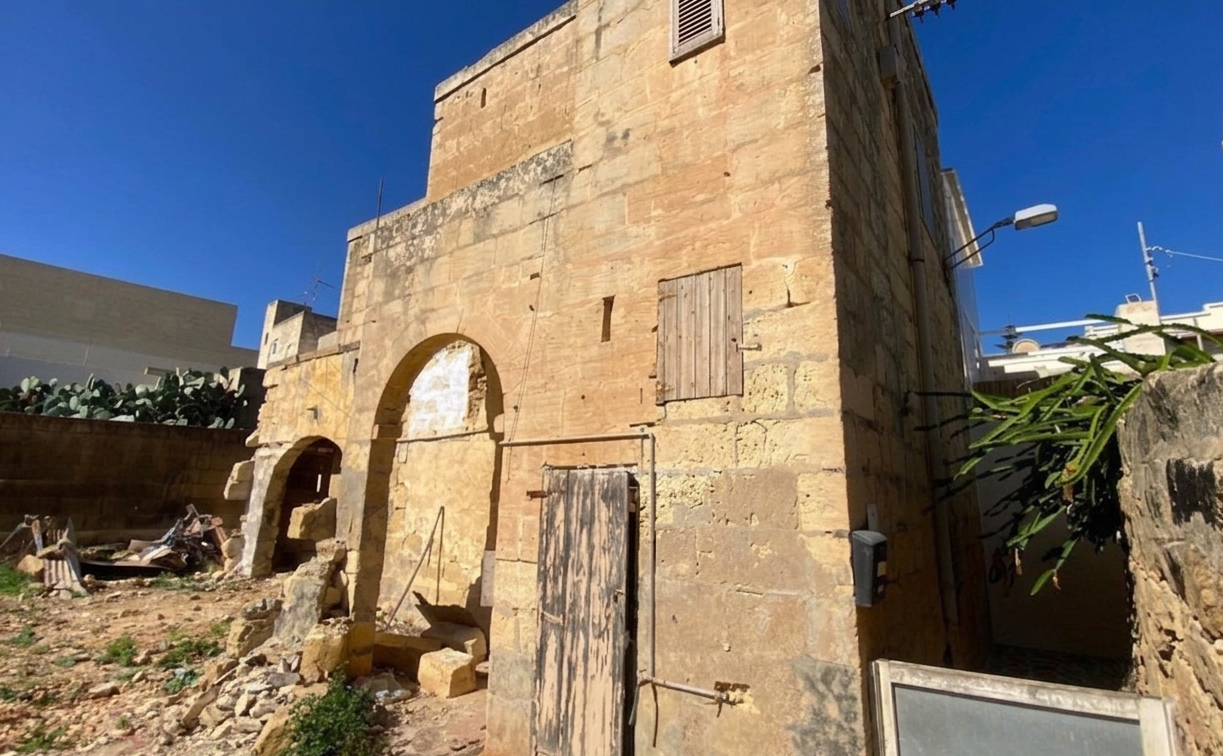
unconverted house in Gozo before renovation work
A farmhouse in Gozo is one of the most extraordinary properties you can own. Thick limestone walls. Vaulted ceilings. A courtyard open to the sky. Views across countryside or sea that have barely changed in centuries.
It is also one of the most complex renovation projects you can undertake. Not because of the building itself, but because of everything surrounding it: the planning framework, the team required, the sequencing of decisions, and the gap between what buyers imagine and what the process actually involves.
Every year, expats purchase unconverted farmhouses in Gozo with a vision and a budget. A significant number of them discover, months or years in, that they underestimated the project. Not necessarily in cost, but in complexity, in time, and in the number of things they needed to know before they started.
This article gives you a clear picture of what a farmhouse renovation in Gozo actually involves. Not to discourage you, a successfully renovated farmhouse in Gozo is a genuinely exceptional place to live. But to give you the honest overview that too few people receive before they sign the deed.
A farmhouse is not a shell-form apartment
The most important thing to understand first is that a farmhouse renovation is an entirely different category of project to finishing a shell-form apartment.
A shell-form apartment arrives as a blank concrete box. The structure is new, the dimensions are regular, and the project is essentially about fit-out: deciding where the kitchen goes, specifying the tiles, running the electrical and plumbing first fix.
A farmhouse is a historic structure. The walls are typically 50 to 80 cm thick limestone. The floors may be original stone slabs, compacted earth, or later concrete poured over earlier materials. The rooms were designed for a way of life that has nothing to do with contemporary living. The building may include agricultural outbuildings, a ruhħ (grain store), water cisterns, animal shelters, and a series of spaces that need to be reinterpreted entirely.
The renovation requires not just fit-out decisions but structural assessment, interpretation of the existing building, and a creative process of turning agricultural spaces into habitable rooms while respecting what makes them special in the first place.
The planning framework: what you can and cannot do
Most farmhouses in Gozo sit in ODZ areas (Outside Development Zone). This is the rural land outside the official development boundaries, and it is subject to its own planning regulations that are significantly more restrictive than those governing urban properties.
The ODZ framework in Malta is governed by rural policy guidelines that determine what changes can be made to existing rural structures. In simplified terms, you can restore and convert what exists. What you cannot generally do is add new footprint, significantly raise the height, or build structures that were not part of the original agricultural complex.
This has significant implications for buyers who purchase a farmhouse with plans to add a pool, a garage, a guest wing, or a rooftop terrace. Some of these additions may be permissible. Others may not. The answer depends on the specific property, its designation, and the planning history of the site.
The perit — the Maltese architect-engineer who is the licensed professional responsible for planning applications , is the person who navigates this framework. No planning application can be submitted in Malta without a perit. For a farmhouse renovation, engaging the right perit early is not optional. It is the first step.
Before any design decisions are made, before any interior designer is briefed, before any budget is set: appoint a perit with experience in rural and heritage properties in Gozo, and establish clearly what the planning framework allows for your specific property.
The structural reality
Old farmhouses in Gozo were built to last, and in many ways they do. Limestone construction is robust, thermally effective, and genuinely beautiful. But it was also built for a different purpose and a different era, and it requires careful assessment before any works begin.
Things that are commonly discovered during structural assessment:
Roofs that have been patched, rebuilt, or partially collapsed over the years. The traditional Gozitan flat roof (a limestone slab roof) has specific structural logic that must be understood before anything above or below it is touched.
Floor structures that cannot support modern loading without reinforcement, particularly if upper levels are intended for habitable use.
Water cisterns beneath ground floors. Most traditional farmhouses have one or more underground cisterns. They are a historic water management feature and, depending on their condition, may be an asset (a private water supply) or a structural consideration that affects where certain floor elements can be placed.
Walls that have been informally modified over the decades. Openings cut without lintels, infill sections of different material, informal extensions added at various points in the building's history.
None of these are necessarily problems. All of them need to be understood before works begin.
The project team: more people than most buyers expect
A farmhouse renovation in Gozo typically involves more professionals than most buyers anticipate.
The perit manages planning, structural drawings, and formal submissions to the Planning Authority. Their involvement is mandatory from a regulatory standpoint and essential from a technical one.
A structural engineer may be required separately from the perit for specific elements of the project, particularly for roof structures and floor reinforcement.
Specialist conservation contractors may be required for any work that involves heritage-listed elements, original stone features, or restoration of traditional finishes. Not all contractors in Gozo have experience working with old limestone structures. The right contractor for a farmhouse renovation is not necessarily the same contractor who would fit out a new apartment.
An interior designer arrives after the planning and structural phase is resolved, to define how the spaces will function and feel: the layout of rooms, the relationship between old materials and new finishes, the kitchen, bathrooms, lighting, and all of the decisions that turn a structure into a home.
Each of these roles is distinct. The perit is not the designer. The contractor is not the structural engineer. Understanding who does what, and in what sequence, is fundamental to managing the project effectively.
The sequencing challenge
In a farmhouse renovation, the order in which decisions are made matters enormously.
Design decisions cannot be made until the planning framework is clear. Structural decisions cannot be finalised until the assessment is complete. Finishes and interior decisions depend on the structural outcome. Budget cannot be set accurately until all of the above is resolved.
This creates a process that takes longer than most buyers expect before any physical work begins. A realistic planning and design phase for a farmhouse in Gozo, done properly, takes six months to a year before construction starts. Buyers who try to compress this phase, or who make interior and finish decisions before the planning and structural picture is clear, tend to find themselves redesigning, reordering, and spending more than they needed to.
What makes a farmhouse renovation worth it
Despite everything above, there is a reason farmhouses in Gozo are among the most sought-after properties on the island and command the highest prices once restored.
The spatial quality of a well-converted farmhouse is impossible to replicate in new construction. Rooms with metre-thick walls that stay cool in summer without air conditioning. Vaulted ceilings at heights that new-build regulations would never permit. Courtyards that become the centre of life. Original stone details that carry centuries of use.
Done well, a farmhouse renovation in Gozo produces a home that is entirely of its place, entirely of its time, and entirely unlike anything you could buy off a developer's plan.
The key word is done well. And done well requires understanding the process before you start.
The complete guide
The overview above covers the essential landscape. But a farmhouse renovation involves a great deal more detail: the specific permit categories, the full list of professionals and their respective roles, the technical sequence of works from demolition to final finishes, the most common and most costly mistakes buyers make, and how to manage the entire project from purchase to completion.
I have written all of that in a dedicated guide specifically for expats buying unconverted traditional properties in Gozo.
If you are at any stage of the process, whether you have not yet purchased, have just signed, or are already trying to make sense of a project that has become more complex than expected, this guide is the clearest resource I know of for this specific situation.
