

Turnkey Renovation in Gozo: Why Expats Choose It Over Separate Trades
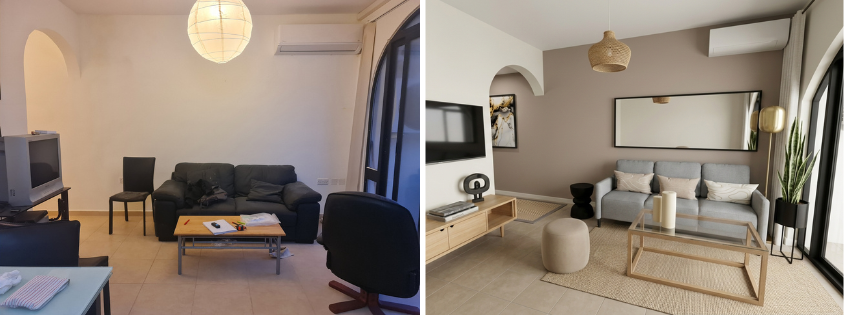
Renovating in Gozo, whether you live here already or not
When I meet expats buying a property in Gozo, they usually picture the renovation itself as the hardest part. In my experience, the real challenge often starts earlier, when it is time to find and coordinate the people who will actually do the work. I see this whether the owner is still abroad at the time of the works or has already relocated to the island. Gozo has skilled tradespeople, but the way projects are organised here can catch foreign buyers off guard either way.
This is why I always explain the difference between a turnkey renovation and separate trades before a client signs anything.
What separate trades really means
Working with separate trades means the owner directly hires and manages each specialist involved in the renovation. One contact for demolition, another for plumbing, another for electrics, another for tiling, another for carpentry, and so on. Each trade is only responsible for their own portion of the work.
On paper this can look cheaper, since there is no coordination fee added to the total. In practice, it shifts an enormous amount of responsibility onto the owner. Someone has to decide who comes first, who comes second, and how each trade depends on the one before it. Someone has to check that the plumber has finished before the tiler arrives, and that the electrician has passed before the walls are closed. Whether the owner is managing this from another country or is living just down the road in Gozo, without a construction background this becomes a full time, unpaid job.
What a turnkey approach actually changes
A turnkey renovation means the owner is no longer the one hiring and supervising each trade individually. Instead, there is a single point of contact responsible for planning, sequencing and quality control across the whole project.
The finished result is the same house. What changes is who carries the risk of delays, miscommunication and mistakes between trades. With a turnkey approach, that risk sits with the person coordinating the project, not with the owner.
Why coordination is harder than it looks, on site or not
Malta and Gozo have their own rhythm when it comes to construction. Tradespeople are often booked weeks or months in advance, materials do not always arrive on the promised date, and a delay in one trade quietly pushes back every trade that follows.
For an expat managing works from another country, the difficulty is not knowing which delays are normal, which trades are reliable, and how to intervene when something goes wrong without being able to see it in person. A missed phone call or a message read a day late can cost a full week on site.
Expats who already live in Gozo full time are not spared either. Being on the island does not mean being available every time a trade needs a decision or a site visit. I regularly see clients spend far more time on their renovation than expected, caught between their own job or daily life and the constant back and forth between trades that a project needs to stay on track.
The pilot role, and how it differs from the designer
This is where the role often called the pilot, or site coordinator, comes in. The pilot is the person who manages the calendar of the works, confirms that each trade is ready to start when the previous one finishes, checks the quality of what has been done, and resolves the small problems that appear on almost every site before they become expensive ones.
This is a distinct role from mine as the interior designer. My work is to define what the space should look like and how it should function: the layout, the finishes, the materials, the overall style. The pilot makes sure that vision is actually built correctly and on schedule. A good design plan with no one to oversee its execution on site is just as risky as no design plan at all.
This is why, on the projects I take on as turnkey, I make sure both roles are covered so my clients are not left with a beautiful plan and no one to make sure it gets built the way it was designed.
What the pilot role costs, and why it is worth it
Coordinating a site properly takes time, and that time has a cost. As a general figure, adding a pilot to manage the works typically adds around 15 % to the base cost of the project.
It can be tempting to skip this and save that percentage. In my experience, this is rarely where clients end up saving money. A single week of delay caused by two trades arriving on the wrong day, or a finish that has to be redone because no one checked it before the next trade covered it up, often costs more than the pilot fee itself. That 15 % is really the price of not having to manage all of this yourself, and of knowing that someone is checking the site so you do not have to.
What this means for your renovation project
If you are converting a shell form property, renovating a house of character, or updating a resale apartment in Gozo, whether you are still abroad or already settled on the island, choosing a turnkey approach is not simply a matter of comfort. It directly affects your budget, since delays and miscommunication between trades are one of the most common causes of cost overruns. It also affects the outcome, since a coordinated site produces cleaner finishes than one where each trade works in isolation, unaware of what the next one needs.
Choosing between separate trades and a turnkey approach really comes down to who takes on the coordination risk. Whether you are abroad, newly arrived, or already settled in Gozo, few people want to spend their time chasing tradespeople rather than making decisions. Working this way with my clients removes that burden while keeping the same level of control over the design and the final result.
My role during this phase, alongside the pilot
Even once the pilot takes over the day to day coordination of the works, I stay involved. My role during this phase is to make sure what gets built on site actually matches the design intent, not just the general idea of it. I check that finishes, layouts and details are being executed the way they were planned, I answer questions that come up once the trades are actually working with real walls and real constraints, and I make the small adjustments that almost every site needs along the way, without losing the coherence of the original design. The pilot keeps the site moving. I make sure it keeps moving in the right direction.
