

Do You Need an Interior Designer for Your Gozo Renovation or Shell Form Project?
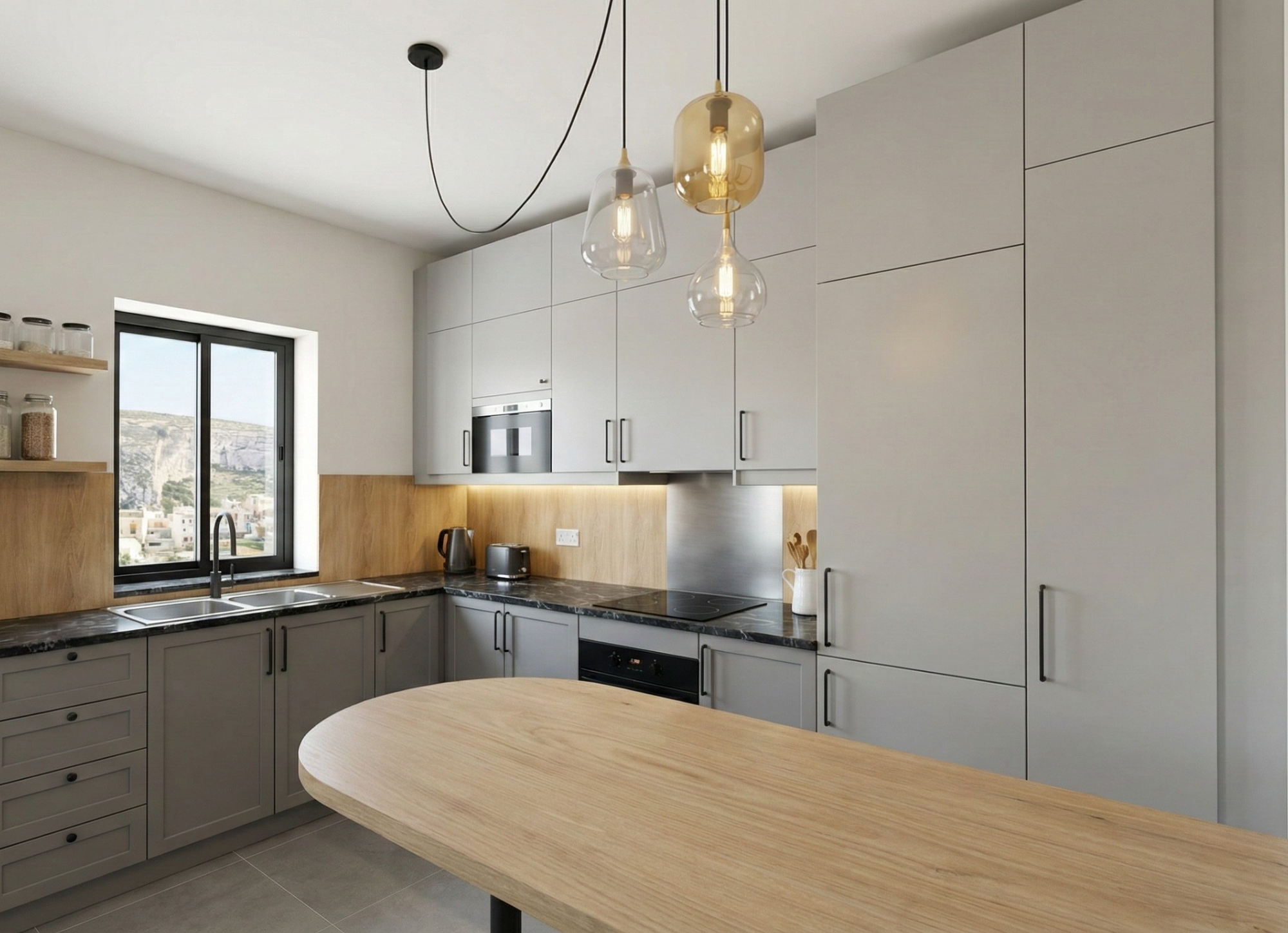
Every expat buying or renovating in Gozo eventually asks the same question. Do I actually need an interior designer, or can I manage this myself with a contractor and a Pinterest board?
The answer depends on what you're working with. A shell form and a finished resale apartment are two very different starting points, and they carry very different risks if you get the planning wrong.
Design is more than choosing colours
Most people picture an interior designer as someone who picks paint, fabrics, and furniture. That's part of the job, but it's the smaller part.
The bigger part is technical planning before a single wall goes up, or before the existing ones change. Where does the plumbing run. Where does every socket sit, including the ones behind the bed and the ones your contractor will forget. How the AC units are positioned so they don't fight the lighting plan. Which finishes actually hold up to Gozo's climate and water, and which ones will look tired in two years.
None of that shows up on a moodboard. All of it shows up on your final invoice if it's missed.
If you're converting a shell form
A shell form is basically a blank envelope. No internal walls in most rooms, no fixed layout, sometimes not even confirmed positions for plumbing and electrical. Every single decision here is structural as much as aesthetic, because you're not adjusting an existing space, you're creating one from nothing.
This is exactly where working with a designer makes the biggest difference. Getting a layout wrong on paper costs you an hour of revision. Getting it wrong after the walls are up costs you weeks and a contractor's invoice. A proper set of technical plans before construction starts is what keeps a shell form conversion on budget and on schedule.
If you're renovating an existing property
A full renovation with new plumbing, electrical, or a reconfigured layout has its own version of the same problem. Coordinating plumbers, electricians, and contractors without a single technical plan tying it all together is how projects run over budget and over time, even when you're living five minutes from the site and popping by every day.
Even small renovations are harder alone than they look
It's tempting to think a small project doesn't need help. One bathroom, one kitchen, a couple of rooms refreshed. But small doesn't mean simple. You're still making dozens of decisions, tile against grout colour, socket height, which finish actually wears well, and you're making most of them without knowing what you don't know yet.
The hard part isn't picking things you like. It's being sure you haven't missed something that only shows up once the tiler has already left. Even a modest renovation benefits from someone checking the details before they're permanent.
When you might not need the full service
If your property is already finished and furnished and you're only refreshing the look with new soft furnishings, a full design service may be more than you need. A single consultation visit to sanity check your choices is often enough. And if you're genuinely confident with space planning and know the local suppliers, running a straightforward, non structural project yourself is entirely doable.
What working with a designer actually looks like
It starts with a site visit. I survey the space in person, take stock of what exists, what's fixed and what can change, and talk through what you actually want from the rooms. From there comes a layout and moodboard, then the technical plans that plumbers and electricians actually build from. A shopping list and budget estimate follow, built around real supplier quotes rather than guesswork. For shell form conversions and full renovations, site coordination during the works is included, so you're not chasing contractors yourself on top of everything else.
For a finished property that just needs styling, the process is lighter. No structural plans, no site management unless it's a full property refresh, just the design decisions that make a space feel finished rather than furnished.
The real question to ask yourself
It's not "can I do this myself." Most people technically can. It's "what is my time and my mistakes going to cost me if I get it wrong." For a shell form conversion, that cost is almost always higher than the design fee. For a full renovation, even a small one, it's the details you don't think to check that end up costing you. For a cosmetic refresh on a property you already know well, it might not be worth it at all.
If you're not sure which category your project falls into, that's exactly what a first consultation is for.
