

Do You Really Need an Interior Designer in Gozo? Honest Answer
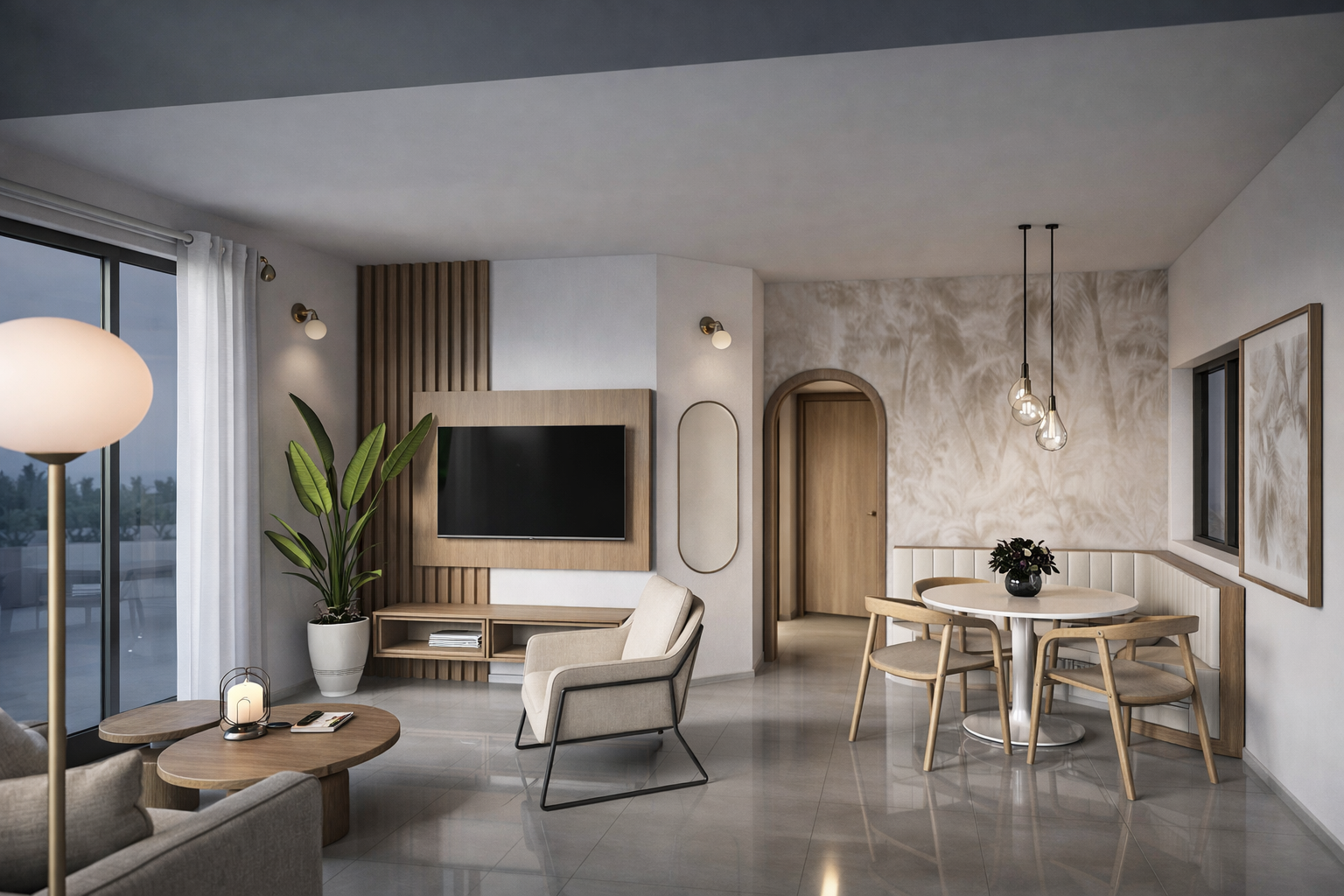
Penthouse project Malsalforn
You are buying a property in Gozo. You have a clear vision, a reasonable budget, and a list of contractors already recommended by your estate agent. So you ask yourself: do I actually need an interior designer? Or is it an unnecessary cost I can skip?
This is one of the most common questions I hear from expat buyers. And because I am an interior designer based in Gozo, you might expect me to say yes, always. But the honest answer is: it depends. Let me break it down properly.
What an interior designer in Gozo actually does
First, a clarification. In Gozo, the term "interior designer" covers very different realities. Some people use it to describe a showroom salesperson who suggests furniture from their own catalogue. Others use it for decorators who choose colours and fabrics. Then there are interior architects like me, who work on spatial planning, technical specifications, and construction coordination before a single tile is laid.
These are not the same service, and they do not deliver the same results.
When I work with a client, I start before construction. I design the layout, specify every technical element (drainage, electrical, lighting, AC positioning, storage), coordinate with contractors, and make sure the finished space actually works, not just looks good in a photo.
When you probably do not need a designer
Let me be direct. There are situations where hiring a designer is not the right call.
If you are buying a fully furnished, move-in-ready resale apartment and you want to change a few cushions and a lamp, you do not need a designer. You need a good eye and a shopping afternoon.
If your renovation is very limited in scope (repainting walls, replacing a bathroom fixture, updating light fittings), the work does not justify design fees. A reliable contractor and your own decisions will do the job.
If you are highly experienced in construction and renovation, speak the local language, have time to visit regularly, and know how Maltese building standards work, you may be able to manage the process yourself.
When you genuinely need one
Here is where things get more nuanced, especially for expat buyers in Gozo.
You are converting a shell form property. Shell form is a raw structure: concrete floors, bare walls, no kitchen, no bathrooms, no partitions. The decisions you make before works start, including room layout, drainage positions, electrical circuit design, ceiling heights, and thermal insulation, cannot be undone cheaply once concrete is poured or tiles are laid. Getting these wrong costs far more to fix than a designer would have cost to hire.
You are managing the project from abroad. If you live in the UK, France, Ireland, or elsewhere in Europe and you are trying to coordinate a renovation remotely, you are exposed. Local contractors in Gozo are often excellent at their trade but do not always communicate proactively, manage timelines, or flag problems before they become expensive. A designer on the ground acts as your eyes, your translator, and your technical safeguard.
You have had bad experiences with contractors already. Gozo's construction market is active and demand is high. Finding reliable, skilled tradespeople who respect deadlines and specifications takes time and local knowledge. If you have already been let down once, that experience is telling you something.
You want the property to generate rental income. Short-let properties in Gozo live and die by their reviews. Guest experience is directly shaped by the quality of the layout, the lighting, the storage, the materials durability, and the overall coherence of the design. A badly planned short-let costs you bookings every season.
You are spending over €50,000 on the renovation. At this scale, the decisions you make (or fail to make) upfront have compounding consequences. A 10% saving on design fees is meaningless if poor planning generates 15% in rework costs.
The real cost of skipping a designer
I hear the objection regularly: "Hiring a designer is an extra cost." And yes, design fees are real. But so is the cost of not having one.
Here is what I see happen when expat buyers manage renovations without technical support in Gozo.
The contractor builds what is convenient, not what is optimal. Drainage routes end up in the wrong place. Ceiling heights are lost because nobody coordinated with the electrician in advance. The kitchen that looked fine on a rough sketch does not actually fit the appliances you ordered.
Then there is the problem of decisions made under pressure. When you are abroad and a contractor calls you to say works are stopping because you have not yet chosen a tile, you pick something fast. Not something right. These rushed decisions accumulate, and the result is a space that feels slightly off in ways you cannot quite explain, even after spending significant money.
A designer does not add cost to a project. A designer shifts the distribution of cost: more thinking upfront, far less fixing later.
What working with a designer in Gozo actually looks like
If you are an expat buyer considering a renovation or shell form conversion in Gozo, here is how I typically work with clients.
We start with a single paid consultation, either in person or by video call, to assess the property, understand your brief, and identify the key risks. From there, I produce a detailed spatial plan and technical specifications document before any contractor is briefed.
This document becomes the project's backbone. It allows you to get comparable quotes from multiple contractors, reduces ambiguity during works, and gives you something to reference if disputes arise.
Throughout construction, I coordinate with the contractor on your behalf, flag issues before they become costly, and make sure the finished result matches what was planned. For clients based abroad, this coordination is often the most valuable part of the service.
So, do you need an interior designer in Gozo?
If you are buying a move-in-ready apartment and making cosmetic changes: probably not.
If you are converting a shell form, managing a full renovation from abroad, or building a property you plan to rent out: the honest answer is yes. Not because it is a luxury, but because the alternative is significantly more expensive and more stressful than most buyers anticipate.
The question is not whether you can afford a designer. It is whether you can afford to renovate without one.
